
Appendix III – Aggregation
Overview
Aggregation is used to provide stable and standardized measurements over time.
Data aggregation is performed according to IEC 61000-4-30 standard.
The system aggregates measured parameters over multiple predefined time intervals, including:
- 150/180 cycle intervals
- 10-minute intervals
- 2-hour intervals
Aggregation Method
- Aggregation is performed using the root of the arithmetic mean of squared values (RMS-based aggregation)
- Minimum and maximum values are also calculated within each aggregation interval.
Aggregation Time Intervals:
- 150/180 Cycle Interval
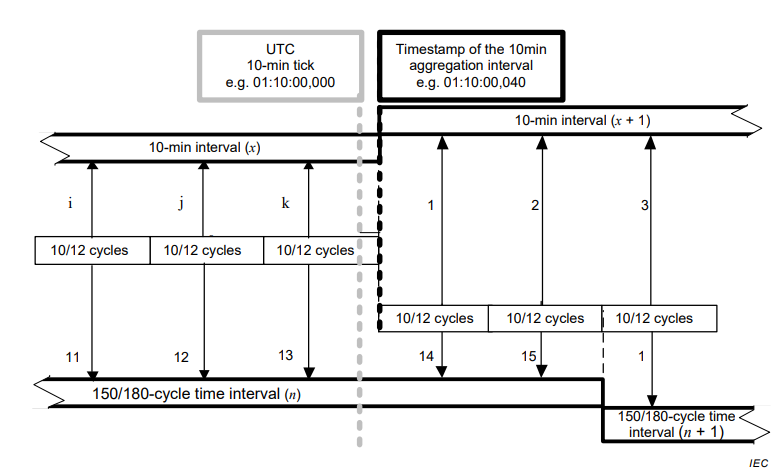
- The 150/180-cycle interval is derived from 15 consecutive 10/12-cycle intervals
- 10-Minute Interval
- The 10-minute aggregation is calculated from multiple 10/12-cycle intervals
- Aggregation is synchronized with the UTC 10-minute time tick.
- When the UTC tick occurs:
- The current aggregation interval is completed.
- A new aggregation interval starts.
- Two-Hour Interval
- The two-hour aggregation is calculated from twelve 10-minute intervals.
Minimum and Maximum Values
- All parameters include:
- Minimum value
- Maximum value
- These values are calculated within each aggregation interval
Exception:
Some parameters (such as energy) may follow different aggregation rules
Special Aggregation Cases
- Certain parameters use specific aggregation methods as defined by the standard.
- Flicker measurements follow a dedicated aggregation method according to IEC 61000-4-15.
Created with the Personal Edition of HelpNDoc: Full-featured EBook editor