
Safety Information
This instrument is designed to conform to IEC 61010 Safety Standers, and has been thoroughly tested for safety prior to shipment. However, using the instrument in a way not described in this manual may negate the provided safety features.
|
|
|
DANGER |
|

Mishandling during use could result in injury or death, as well as damage to the instrument.
 Be certain that you understand the instructions and precaution in the manual before use.
|
|
|
WARNING |
|

 With regard to electricity supply, there are risks of electric shock, heat generation, fire, and arc discharge due to short circuits. Individuals using an electrical measuring instrument for the first time should be supervised by technician who has experience in electrical measurement.
Notation
In this document, the risk seriousness and the hazard levels classified as follows.
|
|
Indicates an imminently hazardous situation that will result in death or serious injury to the operator. |
|
|
Indicates a potentially hazardous situation that may result in death or serious injury to the operator. |
|
|
Indicates a potentially hazardous situation that may result in death or serious injury to the operator or damage to the instrument or malfunction. |
|
IMPORTANT |
Indicates information related to operation of the instrument or maintenance tasks with which the operators must fully familiar. |


|
|
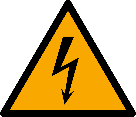
Indicates a high voltage hazard. If a particular safety check is not performed or the instrument is mishandled, this may give rise to a hazardous situation; the operator may receive an electric shock, may get burnt or may even be fatally injured |
|
|
Indicates a strong magnetic-field hazard. The effects of the magnetic force can cause abnormal operation of heart pacemakers and/or medical electronic |
|
|
Indicates a prohibited action. |
|
|
Indicates the action which must be performed. |
|
* |
Additional information is presented below. |



Symbols on the instrument
|
|
Indicates cautions and hazards. When the symbol is printed on the instrument, refer to a corresponding topic in the Instruction Manual |
|
|
Indicates DC (Direct Current). |
|
|
Indicates AC (Alternate Current). |
|
|
Indicates the ON side of the power switch |
|
|
Indicates the OFF side of the power switch |
|
|
Indicates a grounding terminal |
|
|
Indicates an instrument that has been protected throughout by double insulation or reinforced insulation. |






Various Symbols
|
|
Indicates the Waste Electrical and Electronic Equipment Directive (WEEE Directive) in EU member states. |
|
|
cTUVus Certification mark |
|
|
Compliant with Restriction of Hazardous Substances (RoHS) directive |
|
|
Read user manual |
|
Lithium-ion battery recycling symbol |




Protective gear
|
|
|
WARNING |
|

 This instrument measures live lines. To prevent electric shock, use appropriate protective insulation and adhere to applicable laws and regulations.
- Insulating Gloves
Use gloves tagged with beige color.

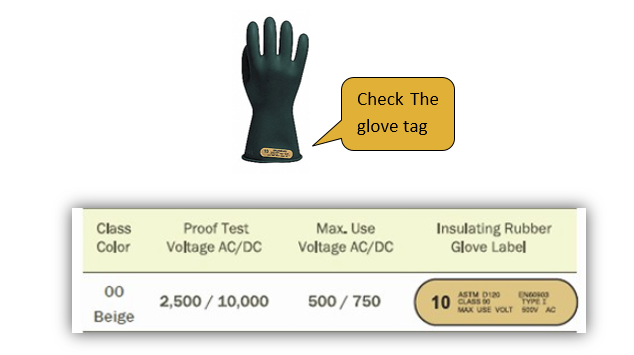
Remember, it’s not the color of the glove that’s important – it’s the tag color.
Comply with NFBA 70E-2012 130.7 and ASTM F496.
- Head Protection

Use class A helmets to reduce the force of impact of falling objects and also reduce the danger of contact with exposed low-voltage electrical conductors.
Comply with ANSI Z89.1 Editions 1986, 1997, or 2003.
 Protective Footwear
Used in cases of falling or rolling objects, objects piercing the sole and electrical hazards.
Comply with ANSI Z41 Editions 1991, 1999, or 2005.
- LOTO Kit
Used to lock and prevent usage of hazardous electrical equipment
Measurement categories
|
|
|
DANGER |
|

- To ensure safe operation of measuring instruments, IEC 61010 establishes safety standards for various electrical environments, categorized as CAT II to CAT IV, and called measurement categories
 Using a measuring instrument in an environment designated with a higher numbered category than that for which the instrument is rated could result in a severe accident, and must be carefully avoided.
- Never use a measuring instrument that lacks category labeling in a CAT II to CAT IV measurement environment. Doing so could result in a serious accident.
- The instrument conforms to the safety requirements for CAT III 1000 V, CAT IV 600 V measuring instruments
- CAT II: When directly measuring the electrical outlet receptacles of the primary electrical circuits in equipment connected to an AC electrical outlet by a power cord (portable tools, household appliances, etc.).
- CAT III: When measuring the primary electrical circuits of heavy equipment (fixed installations) connected directly to the distribution panel, and feeders from the distribution panel to outlets.
- CAT IV: When measuring the circuit from the service drop to the service entrance, and to the power meter and primary overcurrent protection device (distribution panel).
Operating Precautions
Follow these precautions to ensure safe operation and to obtain the full benefits of the various functions
Preliminary Checks
Before using the instrument, verify that it operates normally to ensure that no damage occurred during storage or shipping. If you find any damage, contact your authorized BioBusiness distributor or reseller.
Installation Environment
|
|
|
WARNING |
|

 Installing the instrument in inappropriate locations may cause a malfunction of instrument or may give rise to an accident. Avoid the following locations:
- Exposed to direct sunlight or high temperature
- Exposed to corrosive or combustible gases
- Exposed to a strong electromagnetic field or electrostatic charge
- Near induction heating systems (such as high-frequency induction heating systems and IH cooking equipment)
- Susceptible to vibration
- Exposed to water, oil, chemicals, or solvents
- Exposed to high humidity or condensation
- Exposed to high quantities of dust particles
|
|
|
WARNING |
|

 Use of this equipment adjacent to or stacked with other equipment should be avoided because it could result in improper operation. If such use is necessary, this equipment and the other equipment should be observed to verify that they are operating normally.
- Use of accessories, transducers and cables other than those specified or provided by the manufacturer of this equipment could result in increased electromagnetic emissions or decreased electromagnetic immunity of this equipment and result in improper operation.
- Portable RF communications equipment (including peripherals such as antenna cables and external antennas) should be used no closer than 30 cm (12 inches) to any part of INSPECTOR, including cables specified by the manufacturer. Otherwise, degradation of the performance of this equipment could result.
|
|
|
Caution |
|


Do not place the instrument on an unstable table or an inclined place.
Dropping or knocking down the instrument can cause injury or damage to the instrument.
If the equipment is used in a manner not specified by the manufacturer, the protection provided by the equipment may be impaired.

Handling the Instrument
|
|
|
Caution |
|

To avoid damage to the instrument, protect it from physical shock when transporting and handling. Be especially careful to avoid physical shock from dropping

Handling Cords and Cables
|
|
|
DANGER |
|

 If the insulation on a cord or cable melts, the metal conductor may be exposed. Do not use any cord or cable whose metal conductor is exposed. Doing so could result in electric shock, or other hazard.
|
|
|
Caution |
|

The cord and cable are hardened under the 0 degree or colder environment. Do not bend or pull them to avoid tearing their shield or cutting them.
Using Voltage Cords
|
|
|
DANGER |
|

 To prevent an electric shock, confirm that the white portion (insulation layer) inside the cable is not exposed. If a color inside the cable is exposed, do not use the cable.
|
|
|
Caution |
|

 NOTE The EMISSIONS characteristics of this equipment make it suitable for use in industrial areas and hospitals (CISPR 11 class A). If it is used in a residential environment (for which CISPR 11 class B is normally required) this equipment might not offer adequate protection to radio-frequency communication services. The user might need to take mitigation measures, such as relocating or re-orienting the equipment.
|
|
|
WARNING |
|

• Use only the specified voltage cords. Using a non-specified cord may result in electric shock or short circuits.
• Avoid contact between the cord and the measured line in order to protect the cord from damage. Any contact can cause the instrument to malfunction and lead to short-circuit or electric shock.
|
|
|
WARNING |
|

Lithium batteries are generally safe and unlikely to fail, but only so long as there are no defects and the batteries are not damaged. When lithium batteries fail to operate safely or damaged, they may present a fire and/or explosion hazard. Damage from improper use, storage, or charging may also cause lithium batteries to fail.
 To avoid the possibility of explosion, do not short circuit, disassemble or incinerate battery pack. Battery may explode if mistreated. Handle and dispose of batteries in accordance with local regulations.
 - When storing the instrument, make sure no objects that could short-circuit the connectors are placed near them.
- To avoid electric shock, turn off the power switch, disconnect all the power and voltage cords and current sensor from the device to be measured, and replace the battery pack.
Damage to lithium batteries can occur from physical impact, exposure to certain temperatures, and/or improper charging.
- Physical impacts that can damage lithium batteries include dropping, crushing, and puncturing. Damage to all types of lithium batteries can occur when temperatures are too high (e.g., above 60°C). External heat sources (e.g., open flames, heaters, etc.) can also accelerate failure in cells with defects or damage from other causes.
- Damage to lithium-ion batteries can occur when the batteries themselves or the environment around the batteries is below freezing (0°C) during charging. Charging in temperatures below freezing can lead to permanent metallic lithium buildup (i.e., plating) on the anode, increasing the risk for failure.
- Store lithium batteries and devices in dry, cool locations.
- If batteries are damaged, remove them from service, place in fire resistant container, and Contact a local battery-recycling center for disposal instructions, or contact BioBusiness.
Created with the Personal Edition of HelpNDoc: Maximize Your Documentation Capabilities with HelpNDoc's Project Analyzer